


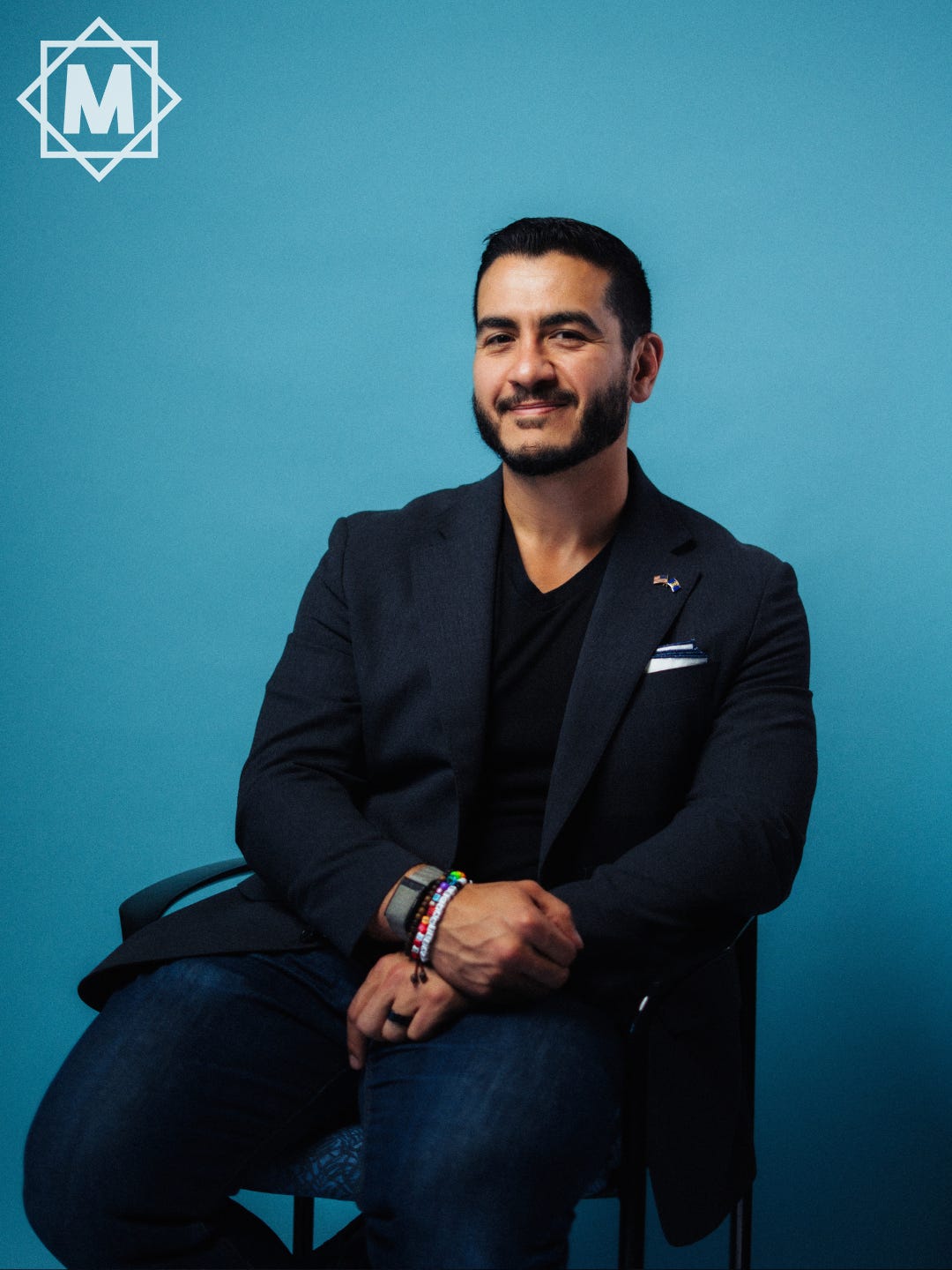
Dr. Abdul El-Sayed is running for the United States Senate at a moment that could reshape both Michigan politics and Muslim representation in America.
A physician, epidemiologist and former public-health official, El-Sayed rebuilt Detroit’s Health Department and later led Wayne County’s Department of Health, Human and Veterans Services. Now, he is seeking the Democratic nomination for Michigan’s open Senate seat.
If elected, El-Sayed would become the first Muslim to serve in the United States Senate.
But when asked what that historic possibility means to him, El-Sayed is careful not to frame his campaign solely around being the first.
“I’m not really running to be the first of anything,” he told Muslim. “I certainly don’t want to be the last.”
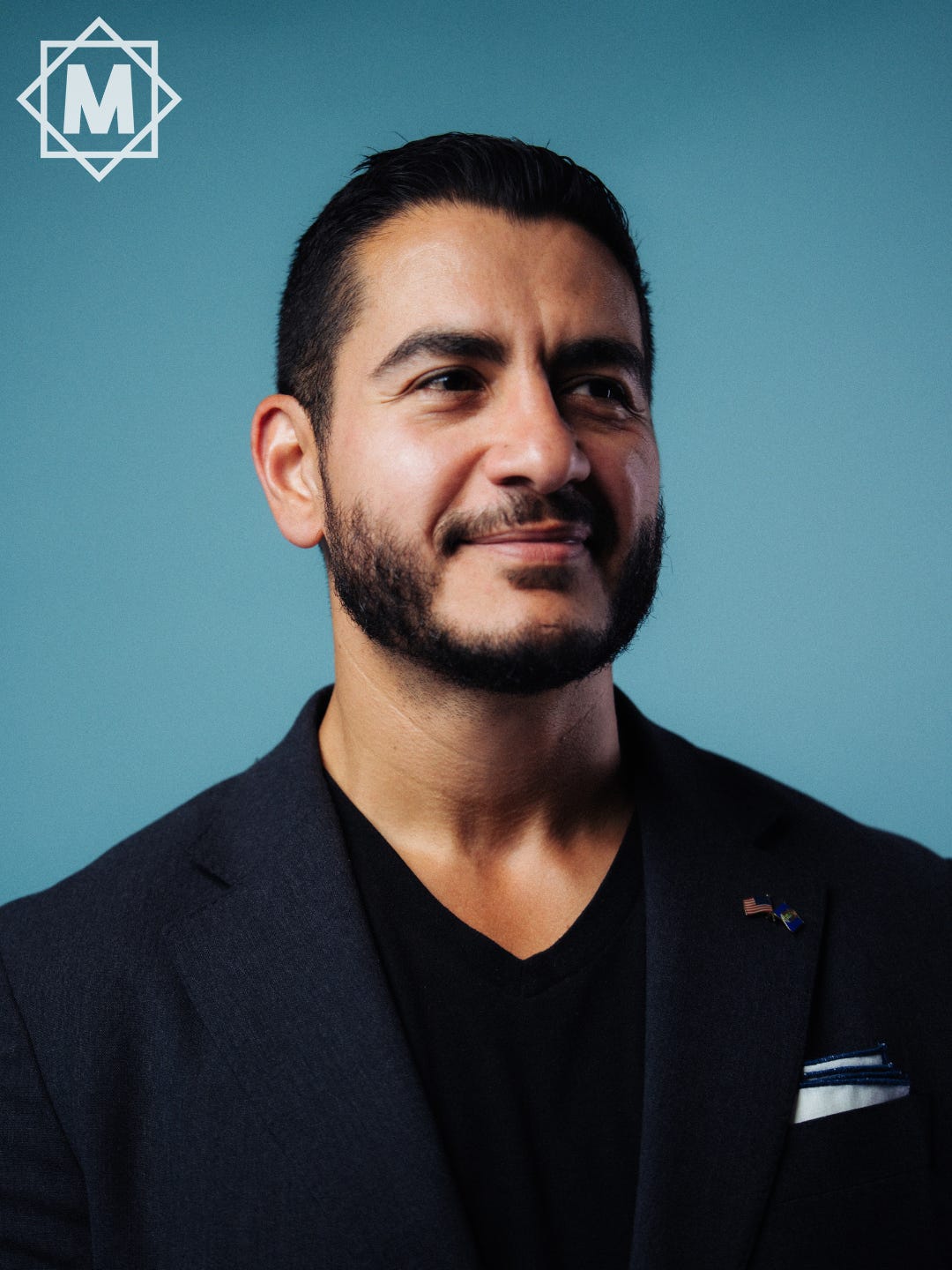
His campaign has become one of the most closely watched races in the country, drawing attention not only for what his candidacy could mean for Muslim Americans, but also for the larger political forces surrounding it.
AIPAC and its affiliated groups spent close to $30 million backing El-Sayed’s opponent, Rep. Haley Stevens, ahead of Michigan’s August 4 Democratic primary. According to the Associated Press, it was the organization’s largest investment in a single race.
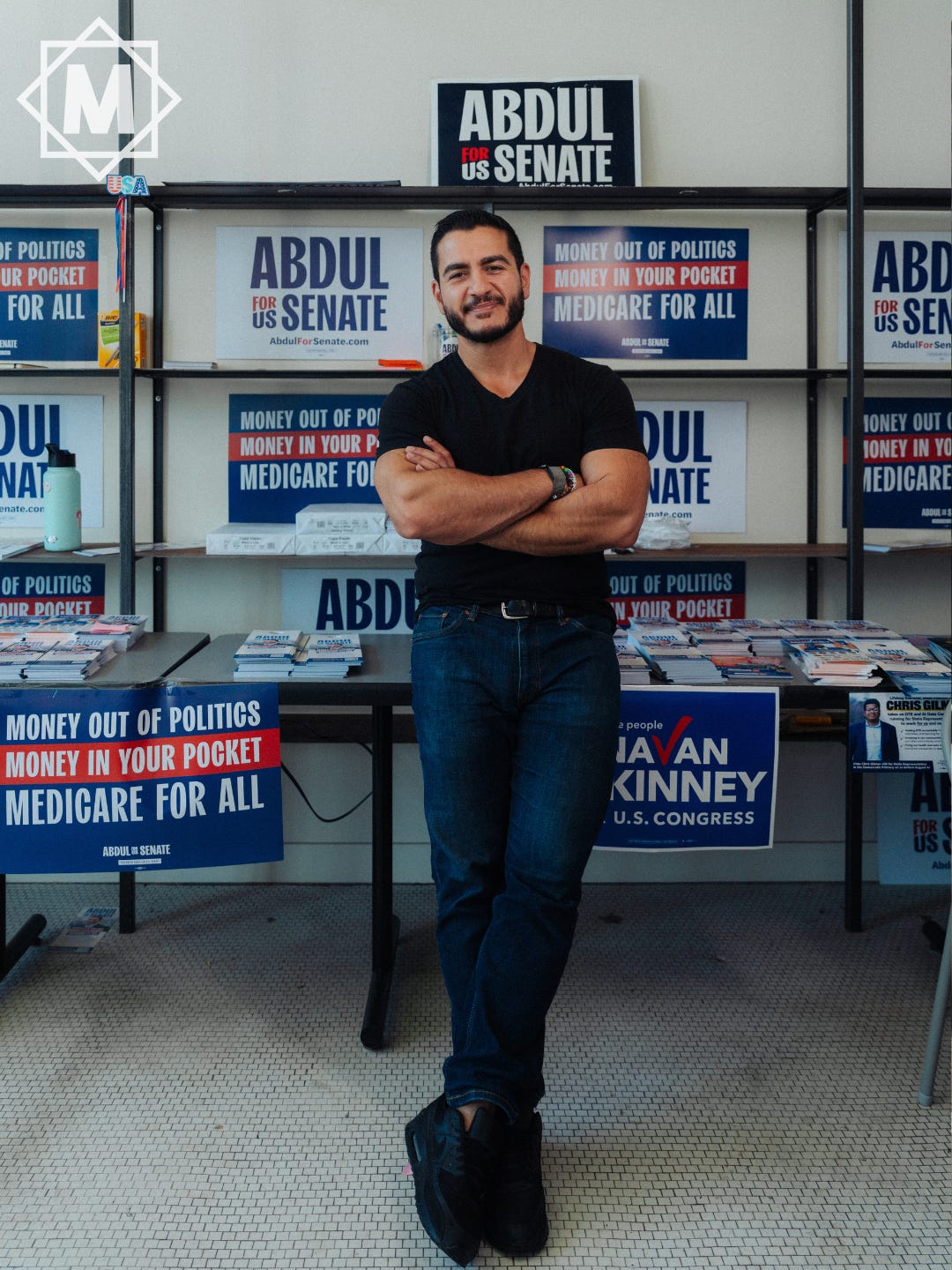
El-Sayed has made the influence of corporations, billionaires and special-interest groups central to his campaign. He is running on a platform that includes Medicare for All, lowering the cost of living, regulating artificial intelligence and ending the use of American tax dollars to fund Israel’s military assault on Palestinians.
In an interview with Muslim, El-Sayed reflected on growing up Muslim in Michigan, the impact Muhammad Ali had on him as a child, his path from medicine into politics and what his campaign could represent for a generation of young Muslims who have never seen themselves in the U.S. Senate.
Introduce yourself. Who is Abdul?
My name is Abdul El-Sayed. I’m a doctor and epidemiologist. I rebuilt Detroit’s Health Department and led Wayne County’s Department of Health, Human and Veterans Services.
I’m running a campaign to get money out of politics, put money in people’s pockets and pass Medicare for All.
In many ways, my work is still about addressing the circumstances that lead to illness in communities, circumstances that leave so many children without the basic things they need and deserve.
I’m hoping that, in the U.S. Senate, we can build the kind of legislation that addresses the circumstances forcing children into poverty, forcing communities into stagnation and leaving people without the healthcare they need and deserve.
If you win this election, you would become the first Muslim senator in American history. Have you allowed yourself to fully process what that would mean?
I’m not really running to be the first of anything. I certainly don’t want to be the last.
The beautiful thing about American democracy is that you can put yourself forward to test the hypothesis of what America is. In doing this, I offer our country and our state the opportunity to demonstrate just who we are.
I’ve been a guy named Abdul in Michigan my whole life. I’ve been Muslim in Michigan almost my whole life. I’m really grateful for what I’ve come to know about a state that is open-minded and big-hearted.
It’s less about what it means for me and more about what it means for America. It is about what it means for other people who have been told that they are different, whether it is because of how they pray or something else about them.
I’m hoping that, once again, America can prove just how big we really are and how much bigger we are than the people who want to define us as being too small to include people like us.
What would seeing a Muslim take the oath of office in the U.S. Senate have meant to you as a young Muslim growing up in Michigan?
I’m never going to forget watching Muhammad Ali do what he did.
The day he passed away was a Friday. I processed it as news that day, but it didn’t really hit me until the next morning. I woke up and couldn’t stop weeping.
He showed me what it meant to be fully proud of who he was in public.
Growing up, there weren’t many Muslims in public spaces, certainly not in politics. As a kid, seeing a Muslim in the U.S. Senate would have shown me something in myself that I never knew was possible.
For most of my life, I thought politics was off-limits.
I hope that an entire generation of young people can watch Muslim elected officials, including the people who came before me and hopefully the people who come after me, and understand what it means to see people who look like you and pray like you fully embraced in their whole selves within our politics.
I think that’s really important.
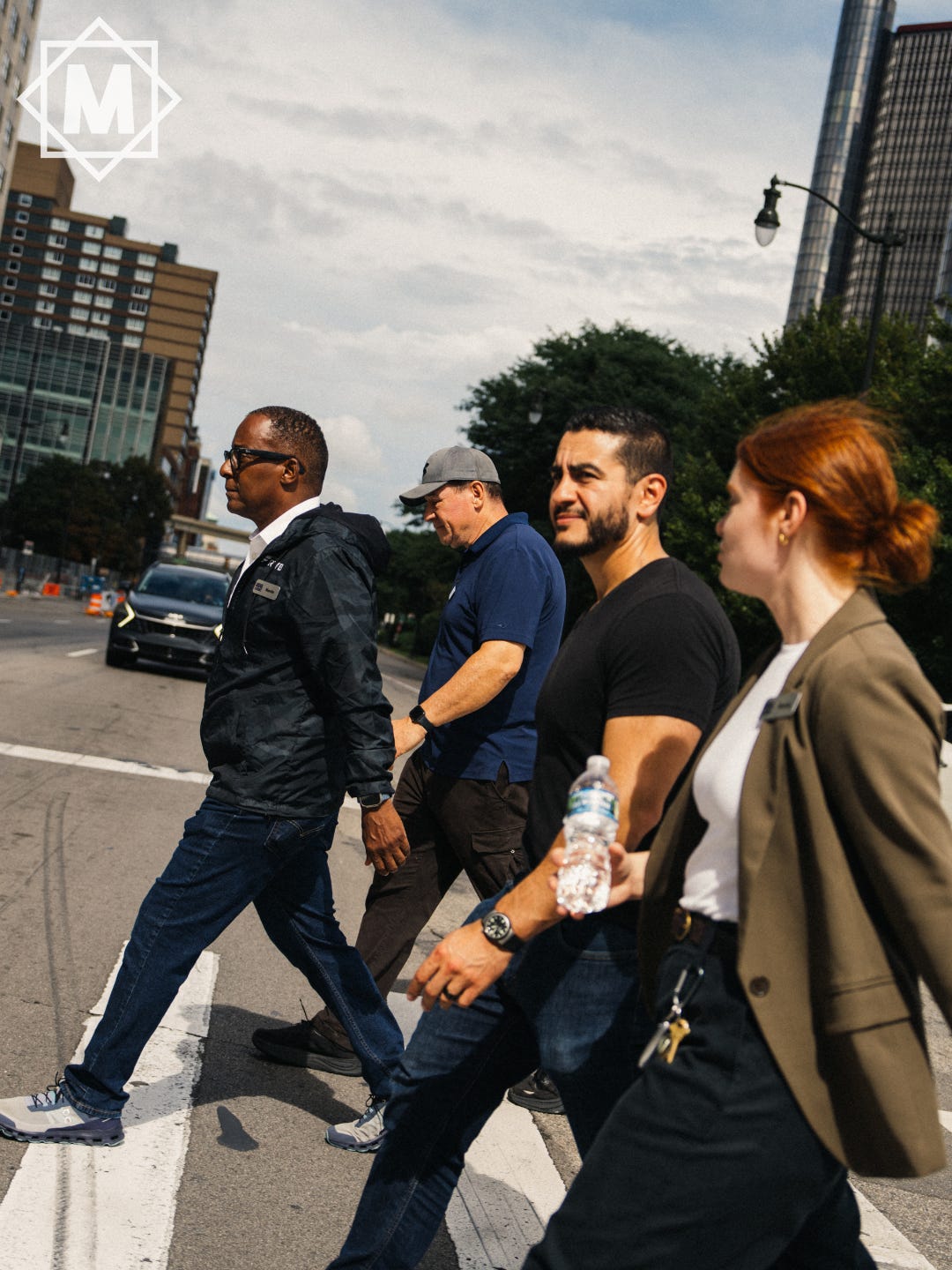
Michigan is home to one of the most significant Arab and Muslim communities in the country. What has that community taught you about organizing, solidarity and political power?
Michigan is a microcosm of the rest of the country. We’re an extremely diverse state. There are all kinds of people here. I grew up in a house built by my father, who is an Egyptian immigrant, and my stepmother, Jackie, who is a daughter of the American Revolution.
Here in Michigan, Muslims have been engaged in public service and public life for a very long time. Michigan is also a place where we have always been able to come together beyond our differences.
What it has taught me is that you shouldn’t apologize for who you are. But you have to bring the best of who you are, embrace the best in others and come together around the goals we share for the kind of community we want for all of our children.
You trained as a physician and led public-health agencies. When did you realize that treating individual patients was not enough and that you needed to confront the political system itself?
In medical school, I remember watching a patient of mine effectively get chewed up and spit out by our system.
She had been in and out of the healthcare system for a long time and had endured terrible experiences. I thought deeply about what it would take to build circumstances where she would feel welcomed in our healthcare spaces.
I also thought about what it means to keep people healthy in the first place.
That means having clean air and clean water. It means being able to walk through your community without becoming the victim of violence. It means not having to worry about what will happen if you become sick. It means being able to receive care within your own community.
That ultimately led me into public health.
Most of my work has been about building public-health institutions that keep people healthy in the first place and empower communities against the ways corporations are too often allowed to have their way at the expense of everyone’s health.


You have faced millions of dollars in outside spending and attacks connected to your positions on Israel and Palestine. What do those attacks reveal about who is permitted to challenge the political consensus in Washington?
Whenever there is a political consensus that differs from the public consensus, meaning both political parties agree on something that the broader public does not agree with, the difference is usually somebody’s money.
When it comes to healthcare, that money is usually from Big Pharma or the insurance industry. When it comes to the question of Palestinian self-determination, that money is AIPAC money.
I’m for Medicare for All. I’m for regulating artificial intelligence. I’m for keeping our money here to invest in our children, rather than sending it elsewhere to drop bombs on children elsewhere.
That has meant there has been a record amount of money spent against me in this race. But it is also a reminder of just how much better our politics can be.
If we believe in a government of the people, by the people and for the people, then we have to get money out of politics.
A special interest or corporation should not be able to buy a U.S. senator or a member of Congress.
But we have also shown that their money is beatable if you are willing to speak the truth, speak it consistently, speak it everywhere and do the work of building a movement that can take on their money.
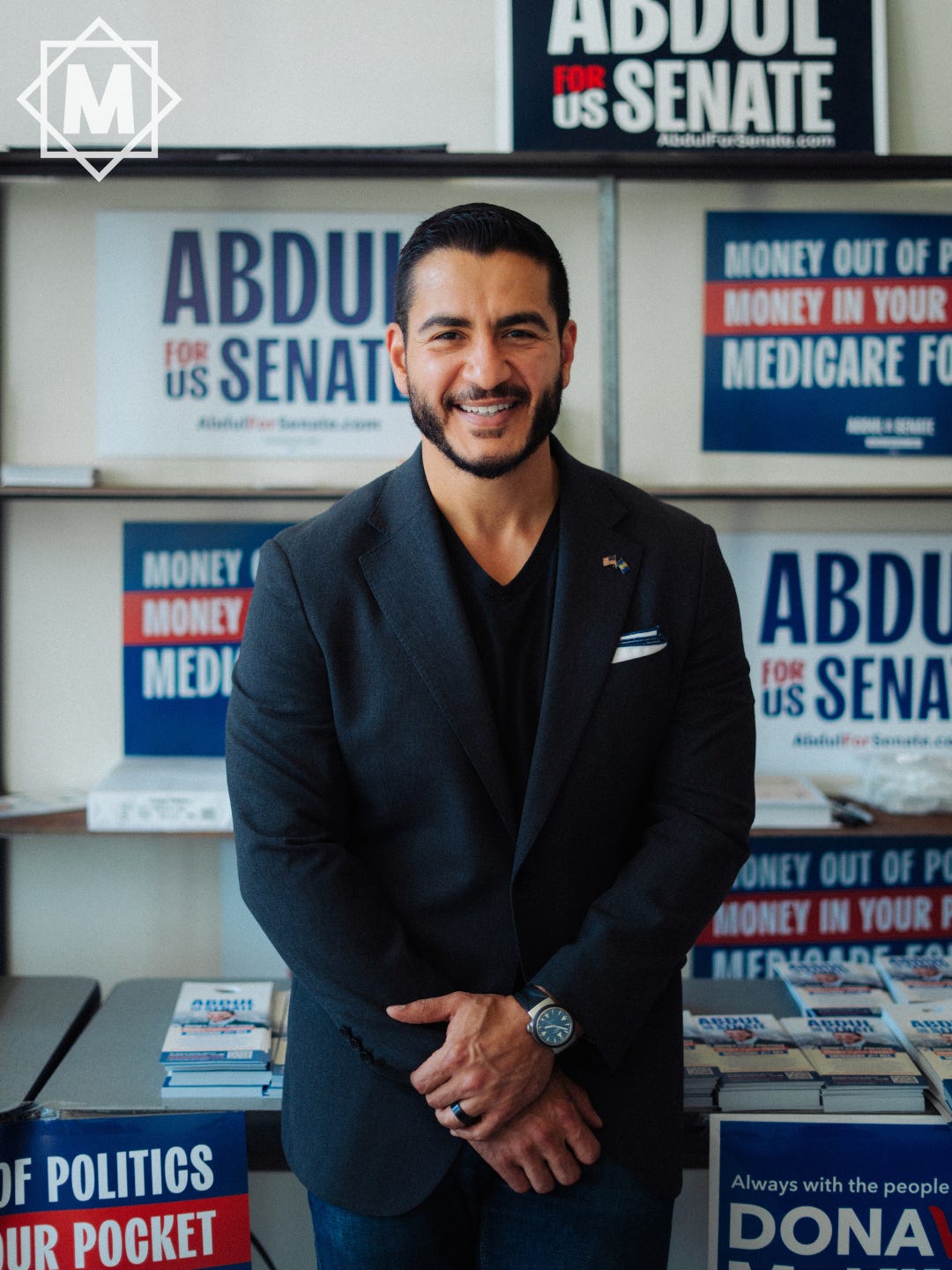
What do you want your community to understand about why you chose to run?
It shouldn’t be this hard.
It shouldn’t be this hard, in the richest and most powerful country in the world, to pay your rent, believe you could ever own a home, buy a second bag of groceries or see a doctor.
It shouldn’t be this hard to pay your taxes and know that your money is being spent on you, rather than being used to do the worst things to somebody else.
I’m running to get money out of politics, put money in your pocket and pass Medicare for All.
Images taken by Ali Imam for Muslim
Photo Assist: Tufail Uddin & Mohtashim Mahin